 Image 1 of 1
Origins: First described in 1821 by Elias Magnus Fries and reclassified into Pleurotus in 1872. Long foraged across North America, Europe, and Asia, it became a major commercial crop in the 1970s due to its heat tolerance compared to standard Pearl Oysters.
The "P. sajor-caju" Mix-Up: Often sold commercially under the trade name "Pleurotus sajor-caju," DNA sequencing confirmed these cultivated "Phoenix" and "Indian" oyster strains are actually P. pulmonarius.
Taxonomy: Pleurotus pulmonarius | Family Pleurotaceae | Phylum Basidiomycota.
Ecology & Growth: A fast-colonizing, white-rot saprotroph that thrives on hardwoods and straw in warmer fruiting temperatures (65°F–78°F).
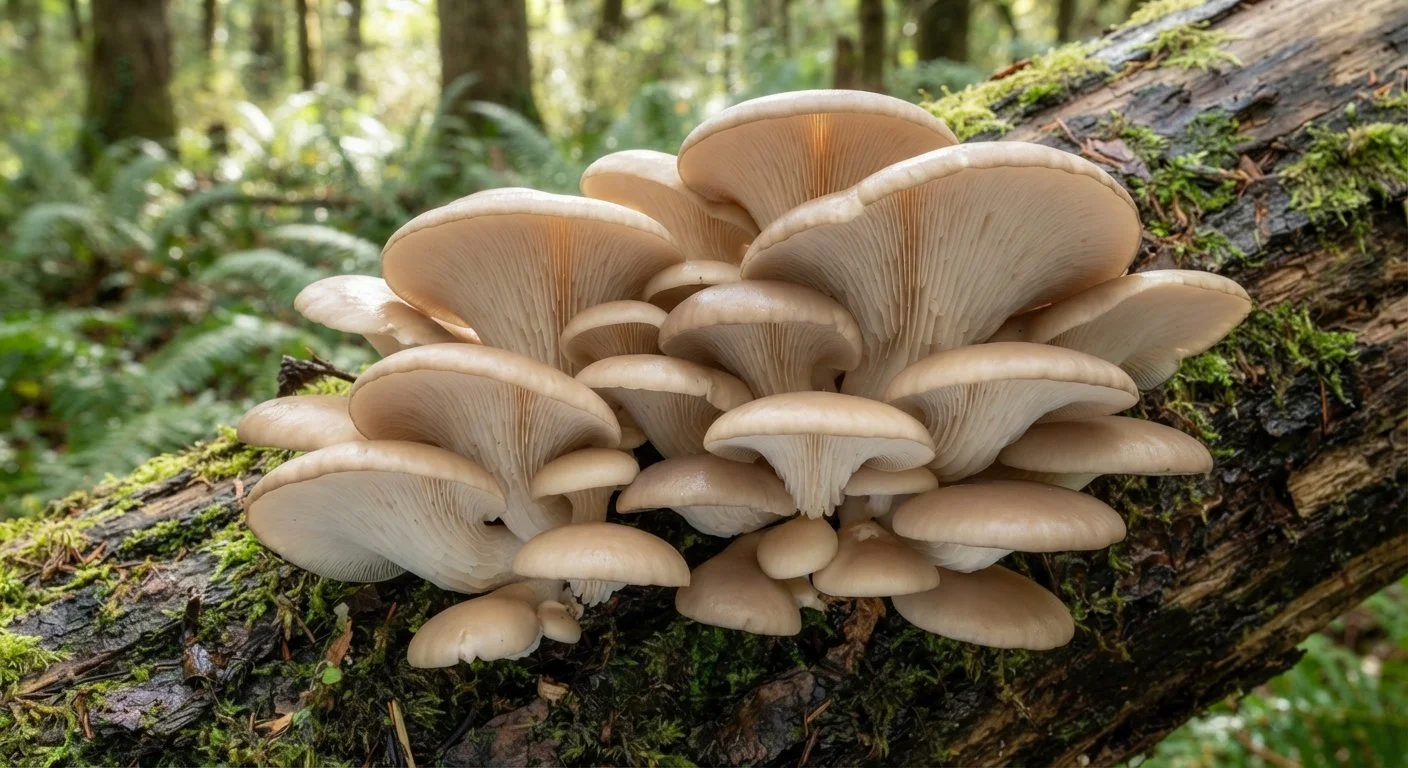
Identification & Spores: Features pale cream-to-tan, shell-shaped caps with a distinct off-center stem and mild anise aroma. Produces a white to pale lilac-gray spore print with smooth, cylindrical, inamyloid spores (7.5–11 × 3–4 µm).
Key Compounds: Nutrient-dense gourmet species rich in complete proteins, B vitamins, beta-glucans, and naturally occurring lovastatin.