 Image 1 of 1
Cordyceps Militaris Liquid Culture 10ml Syringe
Common Names: Scarlet Caterpillar Fungus, Club Fungus, Orange Cordyceps
Cordyceps militaris is a famous entomopathogenic ascomycete fungus prized for its vibrant orange, finger-like fruiting bodies (stromata) and dense profile of bioactive compounds. Unlike its wild alpine cousin (Ophiocordyceps sinensis), C. militaris can be readily cultivated indoors on vegetarian nutrient-enriched grain substrates.
Flavor Profile: Mildly sweet, savory, and nutty with a clean, broth-like finish.
Texture: Chewy, tender, and delicate when fresh; crisp when fully dried.
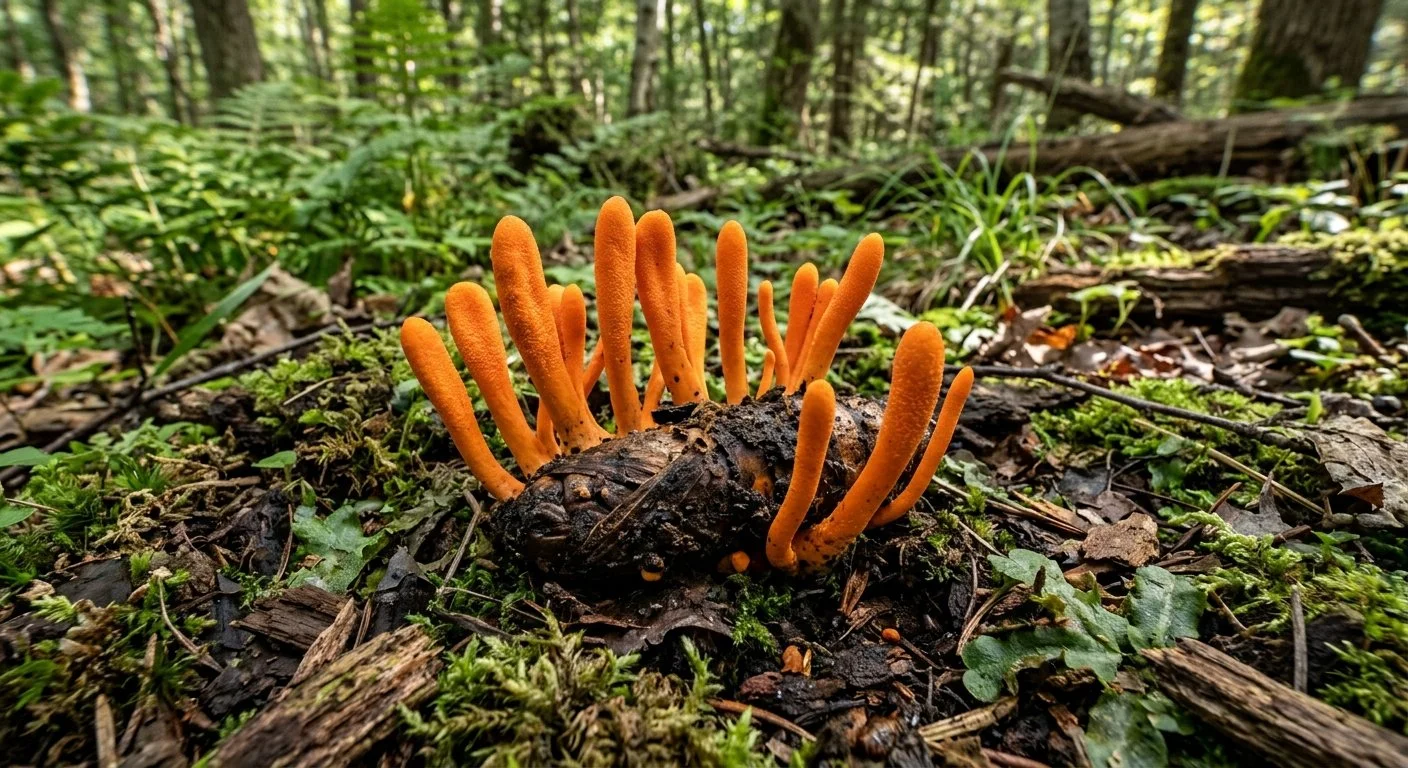
Appearance: Bright orange to reddish, slender club-shaped structures (1–3 inches long) with a pimpled surface from perithecia.
Growth Habit: Insect-parasitizing in nature; grown commercially on supplemented rice or liquid broth mixtures requiring high light exposure during fruiting.
Rich in cordycepin (3'-deoxyadenosine) and adenosine, key nucleoside analogs unique to the species.
High concentration of polysaccharides ($\beta$-glucans) and natural mannitol (cordycepic acid).
Commonly used in functional teas, tinctures, powders, or culinary soups.
Light Requirement: High light exposure (12–16 hours per day under cool LED or broad-spectrum lighting) is required to trigger vivid orange pigmentation and proper stroma formation.
Substrate Compatibility: Nutrient-supplemented brown/white rice, soy peptone, or enriched grain broths.
Temperature Sensitivity: Prefers cooler fruiting conditions around 60–68°F (15–20°C).
This strain was donated to GSG’s vault by mycologist: BellaDaBall